

 Wireless Torque Tools
Error-Proofing: the art and science of preventing as many errors as possible from occurring, supported and augmented by immediate detection if and when they do.
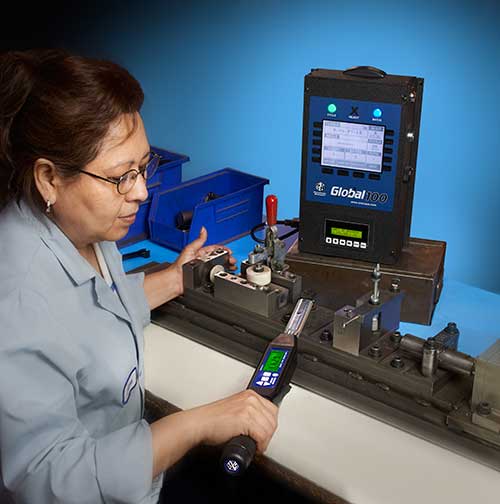
Inherently implicit in error-proofing assembly operations is the requirement for immediate communication between the tools, the operator and the automation systems used in controlling the processes. Many, possibly most, torque application tools are controlled by the operator. This includes all manual torque tools and many powered tools, with pulse tools being an example.
Designing and implementing torque control with an error-proofing goal requires a systems-oriented approach. Among the factors that must be considered and resolved to assure that the optimum system for the operation are:
- Product Accessibility - Is this a product that comes to the tool or must the tool go to the product?
- Throughput Volume - Is this a high or low volume operation?
- Joint Accessibility - Can the fasteners be accessed with a power tool or only with a manual tool?
- Joint Type - Is the fastener a nut or bolt, or is it a hydraulic/pneumatic/fuel type connection?
- System Communications - Does the operation use 24 VDC-based controls, Ethernet-based controls, or both?
- System Capacity – If 24 VDC is used, should some processing (such as batch counting and operation sequencing) be offloaded to a tool controller?
- Data Requirements - What data is needed; attribute, variable or both?
- Tool Quantity - Does the particular operation need one tool or multiple tools, and if multiple how many?
- Economics – What cost levels are justified for purchase and for operation? What ROI is required?
We offer a variety of advanced torque systems that integrate our tools, controllers, software, communication types and capabilities. The variety of our offerings assures that one or more of the systems will be an excellent choice for extending your error-proofing efforts to your torque application needs.
Local versus Remote Assembly - The First Consideration
In “local” assembly the product moves from place to place as each operation is completed, just as started by Henry Ford. In “remote” assembly, the product is too large for such handling and the tool must go to the product. This is often seen in the manufacture of very large products, such as ships and submarines.
We have products for error-proofing torque for both types of operation. We have multiple systems for traditional local assembly lines, and the 3000-Series Exacta® 2 for remote assembly operations. Scroll down to see what best fits your needs!
Design Your Own System - Tool/Controller Compatibility Chart
The chart below is designed to assist you in determining the tools and controllers that will best fill your torque application error-proofing needs. Each product in the chart is linked to the page for that product where you will find complete information on it.
 Global 100
 Global 8
 PTV-FM
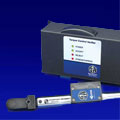 TCV
TCV TCV - Ethernet
 2.4 GHz Preset Clicker-Type Torque Wrenches
 1100-Series Exacta® 2 Digital Torque Wrench
 Hardwired Preset Clicker-Type Torque Wrench
 3000-Series Exacta® 2 Digital Torque Wrench